 English
  العربية
  Nederlands
  Français
  Deutsch
  Italiano
  Português
  Русский
  Español
Press brake tooling plays a crucial role in the sheet metal fabrication process, directly impacting the quality, precision, and efficiency of bending operations. The right tooling can make a significant difference in your manufacturing outcomes. Whether you are new to press brake operations or looking to refine your tooling knowledge, this guide will explore the various types of press brake tooling, their applications, and tips for choosing the right tools to enhance your bending process.

Understanding Press Brake Tooling
Press brake tooling refers to the set of punches and dies used in press brakes to shape and bend metal sheets. The tooling configuration determines the bend angle, shape, and overall precision of the finished part. Proper selection and maintenance of press brake tooling are essential for achieving consistent results and prolonging tool life.

Types of Press Brake Tooling
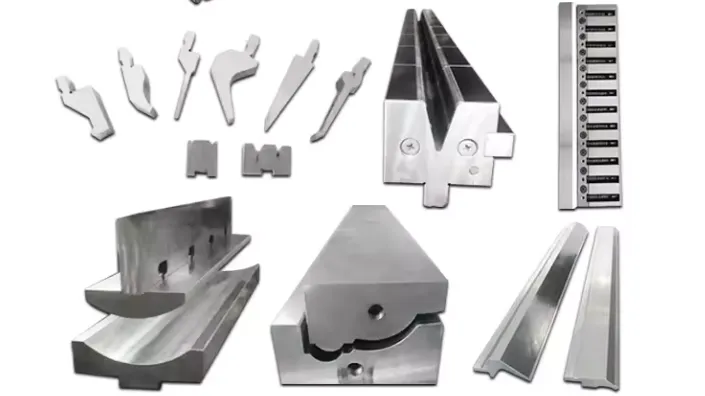
Press brake tooling can be broadly categorized into punches and dies, each serving a unique purpose in the bending process. Below, we’ll break down the most common types of tooling:
Punches
Gooseneck Punches
Designed for bending complex shapes with deep flanges, gooseneck punches prevent interference with the workpiece during the bending process. They are ideal for creating Z-bends and other intricate forms.
Acute Angle Punches
These punches are used for creating sharp bends or angles less than 90 degrees. They are particularly useful in air-bending applications, allowing for a wide range of angles with a single tool.
Offset Punches
Offset punches are used to create bends with two angles in close proximity, often seen in step bends. These punches are essential for producing precise, multiple-angle bends in one operation.
Dies
V-Dies
The most commonly used dies in press brake operations, V-dies come in various opening sizes to accommodate different material thicknesses. They are versatile and widely used for air bending, bottom bending, and coining.
U-Dies
U-dies are specialized for bending rounded shapes and curves. They are often used in applications requiring consistent radii and are particularly suited for bending tubular materials.
Hemming Dies
Hemming dies are used for flattening a bend to create hems, providing clean edges and increased strength in sheet metal parts. They are essential in automotive and appliance manufacturing, where safety edges and seals are required.
Acute Angle Dies
These dies are used in conjunction with acute angle punches for creating sharp, precise bends. They are highly effective in achieving tight angles and are often used in decorative and precision applications.
Selecting the Right Press Brake Tooling

Choosing the right tooling for your press brake involves several considerations to ensure optimal performance and high-quality results:
Material Type and Thickness
The material properties, such as tensile strength and thickness, dictate the type of punch and die required. For instance, high-strength materials may require wider V-dies and stronger punches to handle the increased force without damaging the tooling.
Bend Radius and Angle
The desired bend radius and angle directly influence the tooling selection. Acute angle tooling is necessary for tight bends, while larger V-dies are used for gentler curves. It’s crucial to match the punch and die geometry to the bending requirements to prevent defects like cracking or over-bending.
Press Brake Capacity
The tonnage capacity of your press brake must align with the tooling you choose. Using tooling that exceeds the machine’s capacity can result in damage to both the press brake and the tooling itself. Always verify the compatibility of your tooling with your press brake’s specifications.
Tooling Material
Press brake tooling is typically made from high-carbon steel, tool steel, or carbide, each offering different levels of durability and performance. For high-volume or heavy-duty operations, investing in premium tooling materials can reduce wear and prolong tool life.
Precision and Accuracy Requirements
For applications requiring tight tolerances, such as aerospace or medical device manufacturing, precision-ground tooling offers the highest accuracy. These tools are machined to exact specifications, ensuring consistent, high-quality bends.
Maintaining Press Brake Tooling
Proper maintenance of press brake tooling is essential for extending tool life and ensuring consistent results. Here are some best practices to keep in mind:
Regular Inspection
Routinely inspect your tooling for wear, nicks, or damage. Even minor imperfections can affect bend quality and lead to increased scrap rates.
Cleaning
Keep tooling clean and free of debris. Regularly wiping down punches and dies prevents material buildup, which can lead to inaccurate bends and tool damage.
Proper Storage
Store tooling in a clean, organized environment to prevent accidental damage. Use storage racks designed specifically for press brake tooling to avoid nicks and scratches.
Lubrication
Apply a light coating of oil to prevent rust and reduce friction during bending operations. However, be mindful not to over-lubricate, as excess oil can lead to slippage and affect bend accuracy.
Conclusion
Press brake tooling is a critical component of any metal fabrication process, influencing the quality, efficiency, and range of achievable bends. Understanding the different types of punches and dies, their applications, and how to select the right tooling can greatly enhance your bending operations. By following best practices for tooling maintenance, you can extend tool life, reduce downtime, and consistently produce high-quality parts. If you are looking for the best press brake manufacturer in China, Raymaxbending will be your first choice!