 العربية
  English
  Nederlands
  Français
  Deutsch
  Italiano
  Português
  Русский
  Español
Why Axis Count Matters in CNC Press Brakes
In modern sheet metal fabrication, the CNC press brake plays a critical role in shaping metal parts with accuracy, repeatability, and efficiency. As manufacturing demands become more complex, the axis configuration of a press brake has become one of the most important technical factors influencing machine capability.
The “axis count” of a CNC press brake directly determines the level of motion control, positioning flexibility, and forming precision. In simple terms, more axes mean more controlled movements, which allows the machine to handle more complex geometries with higher accuracy and less manual intervention.
This is why understanding the difference between a 4-axis press brake, a 6-axis press brake, and an 8-axis press brake is essential for selecting the right machine for production needs.
What Is a 4-Axis Press Brake?
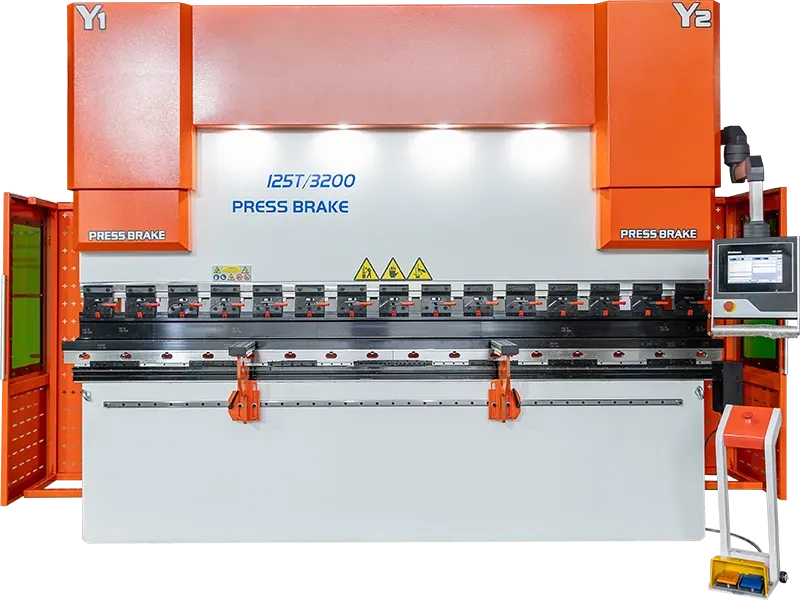
A 4-axis press brake is considered a standard CNC bending machine widely used in general sheet metal processing. It typically includes control over the main bending axes such as Y1, Y2, X, and R, enabling basic automation of the bending process.
Structure and Control Logic
In a typical 4-axis press brake, the system controls:
- Y1 and Y2 axes for ram (upper beam) synchronization
- X-axis for backgauge positioning (front-back movement)
- R-axis for backgauge vertical movement
This configuration allows operators to achieve consistent bending angles and basic automation of part positioning.
Although relatively simple compared to higher-axis models, the 4-axis system is stable and efficient for standard production tasks.
What Is a 6-Axis Press Brake?
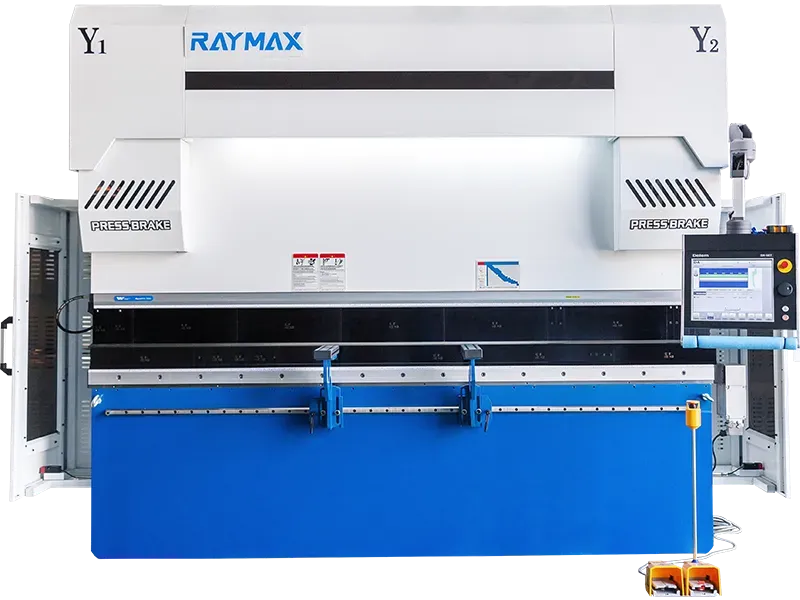
A 6-axis press brake represents a significant upgrade in CNC bending technology. It is also commonly referred to as a 6-axis CNC press brake, highlighting its advanced control system and higher level of automation.
System Upgrade Characteristics
Compared to a 4-axis machine, a 6-axis press brake introduces additional backgauge control and more advanced positioning functions. These improvements allow the machine to handle more complex bending sequences with higher precision.
Key enhancements include:
- Increased backgauge movement flexibility
- Improved positioning accuracy and compensation control
- Advanced CNC system integration for better repeatability
These upgrades significantly reduce manual adjustment during production.
Application Scenarios
A 6-axis press brake is widely used in:
- Medium-complexity sheet metal components
- Batch production environments
- High-consistency part manufacturing
It is commonly chosen by manufacturers who require both efficiency and precision in daily production.
What Is an 8-Axis Press Brake?
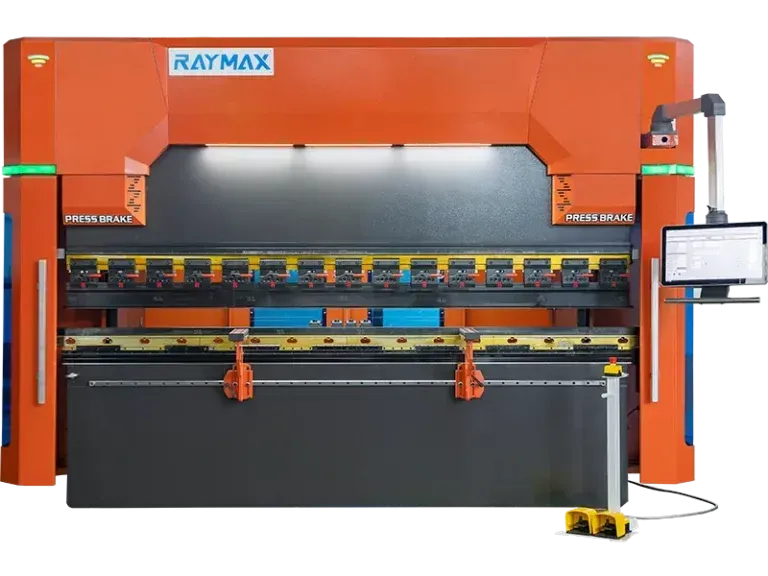
An 8-axis press brake represents a high-end CNC bending solution designed for complex and precision-driven manufacturing environments. It integrates multiple backgauge axes and advanced synchronization control systems.
High-End Multi-Axis Control System
The 8-axis configuration enables highly flexible motion control, including:
- Multi-axis backgauge coordination
- Synchronized movement for complex part positioning
- Advanced CNC control for multi-step bending processes
This level of control significantly enhances the machine’s ability to process intricate geometries.
Application Industries
An 8-axis press brake is typically used in advanced manufacturing sectors such as:
- Aerospace structural components
- High-precision complex sheet metal parts
- Automated production lines requiring minimal manual intervention
These industries demand extremely high accuracy and repeatability, making multi-axis control essential.
4-Axis vs 6-Axis vs 8-Axis CNC Press Brake Comparison
| Comparison Item | 4-Axis Press Brake | 6-Axis Press Brake | 8-Axis Press Brake |
| Machining Complexity | Suitable for basic sheet metal parts and standard bending tasks | Suitable for medium-complexity parts with more flexible bending requirements | Designed for highly complex geometries and advanced multi-step forming |
| Precision & Repeatability | Standard precision for general fabrication applications | Higher precision with improved consistency and reduced manual adjustment | Maximum precision with excellent stability for demanding applications |
| Automation Level | Basic CNC automation with limited backgauge flexibility | Enhanced CNC automation with better positioning and control | Fully advanced multi-axis automation with synchronized control system |
| Production Efficiency | Efficient for small batch and simple production | Higher efficiency with reduced setup time and smoother workflow | Highest efficiency for large-scale and continuous production |
| Application Scope | General fabrication, simple metal parts | Industrial sheet metal production, medium-level manufacturing | Aerospace, high-end precision manufacturing, complex components |
How to Choose the Right CNC Press Brake
Selecting the right machine depends on production requirements rather than simply choosing the highest specification.
Based on Machining Complexity
- Simple parts → 4-axis press brake
- Medium complexity → 6-axis CNC press brake
- High complexity structures → 8-axis press brake
Based on Production Scale
- Small batch production: 4-axis systems are often sufficient
- Medium to large batch production: 6-axis systems offer better efficiency
- High-end automated production lines: 8-axis systems provide maximum capability
Based on Industry Requirements
Different industries have different technical demands:
- Sheet metal fabrication workshops
- Automotive component manufacturing
- Home appliance production
- High-end precision engineering industries
Each sector may prioritize cost, efficiency, or precision differently.
How to Make the Right Decision
The axis configuration of a CNC press brake is one of the most important factors influencing its performance. A 4-axis press brake is ideal for basic production needs, a 6-axis press brake provides a balance of flexibility and efficiency, and an 8-axis press brake is designed for high-end precision manufacturing.
A common and practical upgrade path in the industry is: 4-axis → 6-axis → 8-axis
This progression allows manufacturers to scale their capabilities gradually while optimizing return on investment.
By understanding the differences between these systems, manufacturers can make more informed decisions that align with their production goals, technical requirements, and investment strategy.