 English
  العربية
  Nederlands
  Français
  Deutsch
  Italiano
  Português
  Русский
  Español
CNC press brakes are indispensable to the automotive parts industry because of their high precision, efficiency and automation. These machines provide vital support for the production of automotive parts that typically require sheet metal bending and forming. CNC press brakes meet these complex manufacturing needs, ensuring part quality and consistency. In this article, we will show you the parts that CNC press brakes can produce to give you a brief overview.
CNC Press Brakes Principles
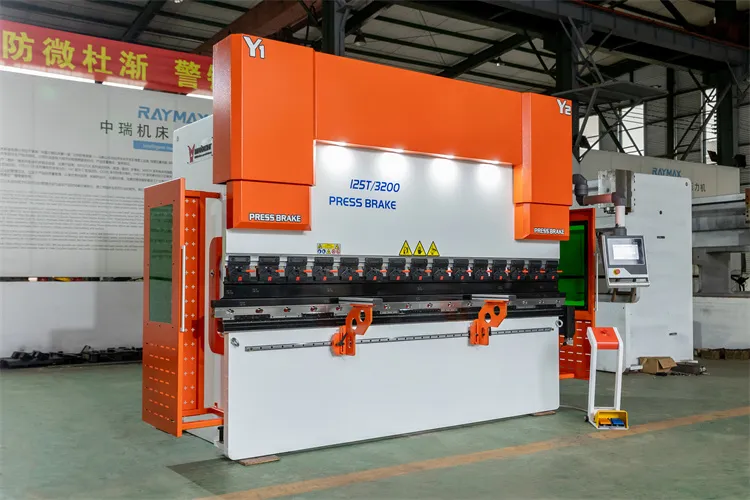
CNC press brakes control the bending process of metal sheets with extreme precision through a computer numerical control (CNC) system. Operators set parameters such as bending angles, torque, and die positions to ensure the parts meet design specifications. The upper and lower dies of the bending machine interact to apply pressure on the metal sheet, bending it into the desired shape. The CNC system handles complex bending requirements, such as multiple angles and intricate geometries.
Applications
CNC press brakes are widely used in the production of various automotive components, covering body parts, internal structures, and functional elements. Below are some of the critical parts commonly produced using CNC press brakes and their specific applications:
Car Door Frames

Car doors are essential external components of a vehicle. Door frames and brackets must have sufficient strength and precision to ensure proper sealing and safety during vehicle operation. CNC press brakes play a vital role in the manufacturing of door frames:
High-precision bending
The multiple bending angles of door frames are complex, requiring precise control of bending angles and pressure. CNC press brakes can perform multiple complex bends according to set programs, ensuring that each door bracket meets design requirements.
Batch production consistency
Mass production of door frames demands uniformity in shape and dimensions. CNC press brakes ensure high repeat accuracy, reducing human errors.
Complex shapes
Modern vehicle designs increasingly focus on streamlined door shapes. CNC press brakes can handle the bending demands for these intricate shapes with flexibility.
Automotive Seat Frames

The strength and shape of automotive seat structures are directly related to passenger comfort and safety. Seat frame designs are complex and involve multiple bending steps. CNC press brakes can complete multiple bends in one operation, reducing processing time and ensuring high production efficiency.
Multi-angle bending
Seat frames often require multiple bends to create complex support structures. The multi-angle bending capability of CNC machines meets these needs, ensuring the overall strength and stability of the seat frame.
Efficient mass production
As seat frames are mass-produced parts, CNC press brakes can quickly change processing parameters to accommodate different models, increasing production efficiency.
Roof Beams & Chassis Components

Roof beams and chassis components are vital load-bearing parts of the vehicle, requiring good compression and bending resistance. These components are usually made of high-strength steel sheets, which are precisely bent by CNC machines to ensure their structural integrity and dimensional accuracy.
Large metal sheets
Roof beams and chassis components are often large, requiring significant bending force. CNC press brakes can easily handle these demands by adjusting bending pressure and dies.
Precision control
These structural parts play a key role in vehicle support and load-bearing. A deviation in bending angles could affect the overall strength of the vehicle body. The precision control of CNC machines ensures that every beam and chassis component meets strict safety standards.
Bumper Brackets

Bumper brackets are part of the vehicle’s external protection system, requiring high strength to absorb impact during collisions. CNC press brakes play an important role in producing bumper brackets:
High-precision bending
The bending precision of bumper brackets directly affects their energy absorption performance. CNC press brakes can bend the brackets according to design requirements, ensuring their strength and rigidity.
Durability and consistency
Mass production of bumper brackets requires each bracket to have the same durability and strength. The high-consistency production capability of CNC press brakes ensures that each batch of brackets meets performance standards.
Engine Brackets
Engine brackets are responsible for supporting the engine’s weight and maintaining its stability during vehicle operation. CNC press brakes, through precise bending techniques, can produce engine brackets that meet structural requirements.
Forming complex support structures
Engine brackets often involve multiple angles and complex structures. CNC press brakes can complete multiple bends through integrated programming, ensuring the bracket meets design standards.
Strength and stability
Engine brackets must bear significant dynamic loads. The bending processes of CNC machines ensure that the brackets maintain strength and structural stability.
Advantages of CNC Press Brakes
High Precision and Efficient Production
CNC press brakes provide precise control over bending angles and pressure, ensuring the high accuracy of every part. This is particularly important for automotive parts that require multi-angle bending and complex shapes. Automated operation allows for mass production, reducing human intervention and errors.
Reduced Material Waste
Through precise control, CNC press brakes optimize bending paths and minimize material waste. This is especially crucial in processing lightweight materials, as reducing waste lowers costs while improving part quality and performance.
Flexibility for Different Materials and Designs
Automotive components involve various materials like steel and aluminum. CNC press brakes can be adjusted to process different materials according to their characteristics. Moreover, as automotive design becomes more diverse, CNC press brakes can quickly reprogram to accommodate the production needs of different models.
Conclusion
CNC press brakes are widely used in the automotive parts industry, producing critical components such as door frames, exhaust systems, seat frames, bumpers, roof beams, and engine brackets. Their precision, efficiency, and automation ensure the quality and consistency of automotive parts, providing strong technical support for modern vehicle manufacturing.
Feel free to contact Raymaxbendng for the best quote! We provide the all-round service to rocket your industry.