 Nederlands
  English
  العربية
  Français
  Deutsch
  Italiano
  Português
  Русский
  Español
Understanding CNC Press Brake Machines
A CNC press brake machine is designed to bend and shape metal sheets with high precision. At its core, it employs computer numerical control (CNC) to manage multiple moving parts and axes, ensuring that each bend is consistent and accurate. The press brake axis refers to the different directions in which these machines move their components – a crucial factor for both simple and complex bending operations. Each axis corresponds to a specific motion, enabling the press brake to perform a range of tasks that would be impossible with a single axis.
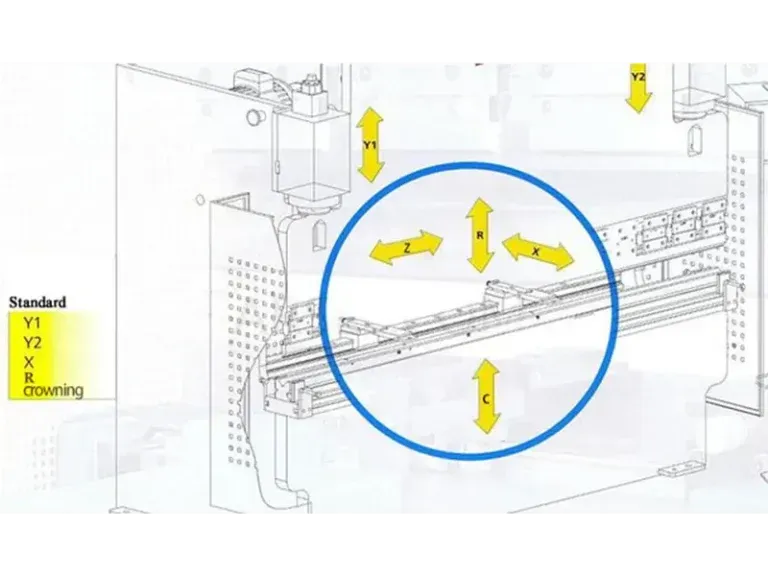
The Core Axes: X, Y, and Z
X-Axis: Horizontal Control
De X-axis primarily controls the horizontal movement of the backgauge – the device that holds the metal sheet in place during bending. A well-calibrated X-axis ensures that the sheet is correctly positioned every time, which is vital for achieving repeatable and accurate bends. In many press brake setups, the X-axis works as the foundational reference for positioning, and its precision directly impacts the overall quality of the final product.
Y-Axis: Vertical Dynamics
Working hand-in-hand with the X-axis is the Y-axis, responsible for the vertical movement of the ram. The ram is the component that applies the necessary force to bend the metal. Variations in the Y-axis movement can result in inconsistent bending depths, so precise control over this axis is essential for maintaining high-quality results, especially when dealing with thicker or more resistant materials.
Z-Axis: Depth Precision
De Z-axis plays a pivotal role by controlling the depth of penetration of the ram into the die. This axis determines the bending angle and, ultimately, the quality of the bend. Even minor adjustments in the Z-axis can lead to significant changes in the angle, making its control critical for applications requiring high precision. For operations where the material thickness and bend angles are varied, having a finely tuned Z-axis is indispensable.
Advanced Control with R-Axis and V-Axis
Beyond the fundamental X, Y, and Z axes, modern press brake machines incorporate additional axes to enhance their versatility and precision.
R-Axis: Variable Radii Bending
De R-axis is specifically designed to manage the movement of the bending die. This axis enables the creation of bends with varying radii, expanding the range of shapes and curves that the press brake can produce. By allowing horizontal movement of the die, the R-axis adds another dimension of control, ensuring that even complex curves are executed with a high degree of accuracy. For operations that require the bending of metal into non-standard shapes, the R-axis is invaluable.
V-Axis: Rotational Capabilities
De V-axis introduces rotational motion into the mix. This axis rotates the bending die, making it possible to produce intricate shapes and angles that would be challenging to achieve with linear movements alone. With the V-axis, press brake machines can adapt to more advanced designs and cater to specialized fabrication needs.
Multi-Axis Backgauge Configurations
The term press brake axis often extends beyond the primary axes (X, Y, Z, R, and V) to include the backgauge system. The backgauge is essential for aligning the metal sheet before bending, and its complexity can vary from simple single-axis configurations to sophisticated multi-axis systems. Here are a few common setups:
- BG-1:Features a single X-axis for basic positioning. This configuration is typically used for simpler bends where precision alignment is not heavily critical.
- BG-2:Incorporates both X and R axes, allowing for horizontal movement along with some degree of variable radius control.
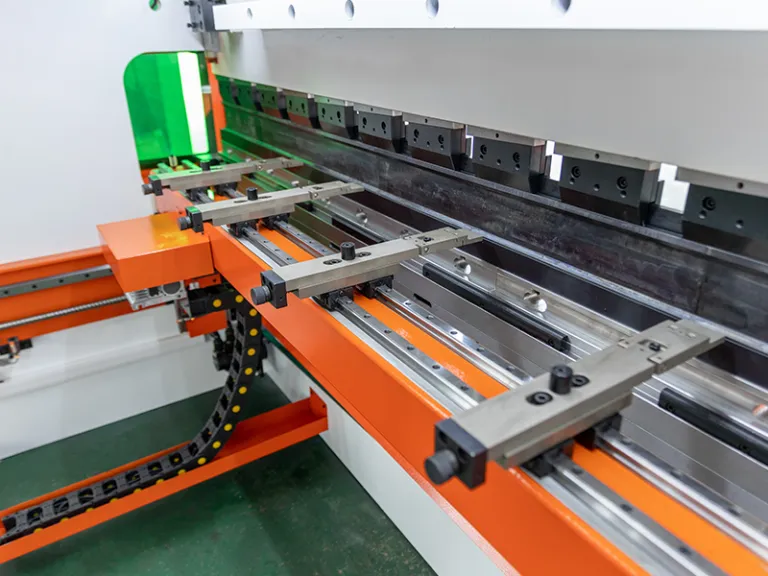
- BG-4:Adds Z-axis control (Z1 and Z2) to the X and R axes, offering enhanced precision in depth control and complex bending operations.
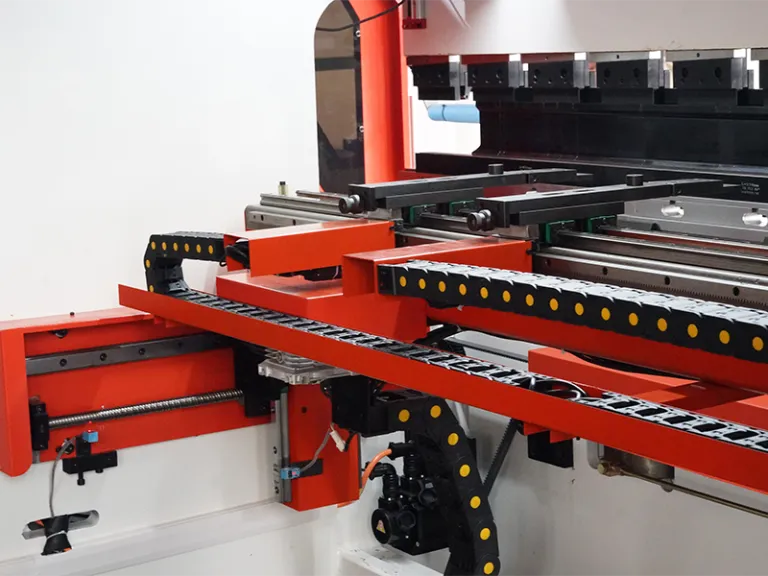
- BG-5 and BG-6:These configurations are more advanced, integrating multiple axes (including dual X, R, and Z axes) to support high-precision, multi-angle bending operations. Such setups are ideal for intricate designs and high-volume production where even the smallest inaccuracies can result in significant errors.

The choice between these configurations depends largely on the bending complexity, material specifications, and precision requirements of your operation. Advanced backgauge systems, equipped with multiple press brake axis controls, can drastically reduce setup times and minimize errors, leading to improved productivity and reduced waste.
Factors to Consider When Choosing a Press Brake Axis Configuration
Selecting the right press brake axis setup is crucial for optimizing your production line. Here are some key factors to consider:
1. Bending Complexity
- Simple vs. Complex Bends:For straightforward bends on a single plane, a press brake with a basic, single-axis backgauge may suffice. However, if your operations involve multiple bends, different angles, or curves, investing in a machine with multi-axis capabilities will yield better results.
- Design Intricacy:Complex designs that require precision bending, such as automotive components or intricate architectural elements, benefit from advanced multi-axis configurations.
2. Material Specifications
- Material Type and Thickness:Different materials respond differently to bending forces. Thicker or harder materials require more tonnage and more precise control, which can be achieved with multi-axis systems.
- Sheet Size:Larger metal sheets may need more comprehensive backgauge systems to ensure consistent alignment and bending accuracy across the entire surface.
3. Precision and Accuracy Requirements
- Tolerance Levels:High-precision applications demand a finely tunedpress brake axis Machines with advanced CNC controls and high-resolution backgauge systems ensure that even the most demanding projects meet quality standards.
- Repeatability:For high-volume production, the ability to consistently reproduce the same bend is essential. Multi-axis systems are designed to offer repeatability by minimizing manual intervention and reducing human error.
4. Automation and Software Integration
Modern press brake machines often come equipped with advanced software that automates programming and operation. This not only improves efficiency but also integrates seamlessly with multi-axis configurations, ensuring that every movement is executed with exact precision.
5. Workspace and Layout Considerations
The physical size of your workshop can influence the type of press brake you choose. While machines with more axes offer greater flexibility and precision, they may also require additional space. Balancing machine capability with available space is critical for an efficient production environment.
Benefits of Multi-Axis Press Brake Machines
Investing in a machine with advanced press brake axis capabilities offers several significant benefits:
- Enhanced Precision: With multiple axes, operators can achieve extremely accurate bends, even in complex designs. This level of precision is essential in industries where tolerance levels are extremely tight.
- Increased Flexibility: Multi-axis machines can handle a wide variety of bending tasks, from simple, single-angle operations to intricate, multi-dimensional bends. This flexibility means that manufacturers can adapt quickly to changing production demands.
- Improved Efficiency: Automation of the bending process through advanced CNC controls reduces setup time and minimizes the potential for errors. This leads to faster production cycles and lower operational costs.
- Consistency and Quality: The repeatability offered by multi-axis systems ensures that every bend meets the required specifications, which is particularly important in high-volume production settings.
Conclusie
Understanding the different numbers of press brake axis configurations is essential for anyone involved in metal fabrication. From the fundamental X, Y, and Z axes that control basic movements, to the more advanced R and V axes that enable complex shapes, each component plays a vital role in the overall performance of a CNC press brake machine. By carefully selecting the right configuration based on bending complexity, material specifications, and precision requirements, manufacturers can significantly enhance productivity, reduce errors, and achieve higher quality outcomes.