 Русский
  English
  العربية
  Nederlands
  Français
  Deutsch
  Italiano
  Português
  Español
In the world of metal sheet forming, bending speed plays a pivotal yet often underappreciated role. The rate at which a metal sheet bends affects key outcomes such as precision, spring back (the metal’s tendency to partially revert to its original shape), and surface finish. Adjusting the bending speed appropriately can ensure quality while balancing production costs.
In this article, we’ll explore how different bending speeds impact forming quality, look at best practices for selecting the right speed for various materials and thicknesses, and discuss how CNC press brakes can simplify speed optimization.
Why Bending Speed Matters
Bending speed controls how quickly a metal sheet deforms when pressure is applied, directly influencing several critical factors. First, bending speed impacts angle precision. Slower speeds allow operators to monitor and adjust the angle more carefully, reducing the risk of over- or under-bending and enabling highly precise results.
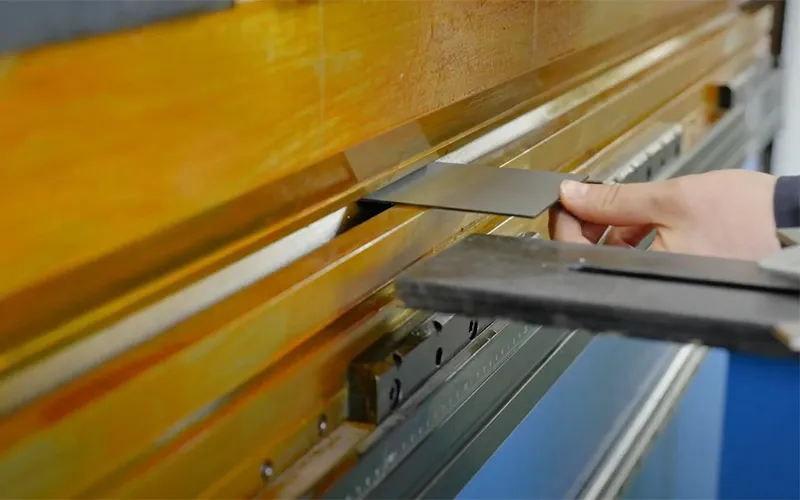
Faster speeds, however, tend to increase springback, as rapid bending leads to increased internal stress. This causes the metal to snap back slightly after bending, which can create angular deviations that are challenging to correct.
Next, bending speed affects material flow and internal stress distribution. Slow bending provides more uniform deformation, allowing stress to spread evenly throughout the material.
This smoother distribution reduces the risk of cracks or fractures, which can be common in metals with high hardness, such as stainless steel. Faster bending, in contrast, can cause localized stress concentrations, potentially leading to minor cracks, especially in harder metals with lower ductility.
Different Materials in Bending
Materials vary widely in their response to bending speed, and each material’s hardness, elasticity, and tendency to spring back play a role.
Алюминий, for example, is relatively soft but has a high tendency for springback. A slower bending speed helps to control this springback, allowing for greater accuracy.

Нержавеющая сталь benefits from slower speeds as well due to its high hardness, which makes it more prone to cracking and surface damage at higher speeds.

Carbon steel is somewhat more adaptable but can still suffer from surface roughness and springback if bending speeds are not carefully controlled.

Thickness on Bending Speed
Sheet thickness is another critical factor when setting bending speed. Thicker sheets are more challenging to bend without risk of fractures, so lower speeds are generally preferred. This is because slower speeds allow stress to build up gradually, preventing any one area from becoming overstressed.

On the other hand, thin sheets are more susceptible to surface wrinkling or uneven bending surfaces at high speeds, so it is essential to find a moderate speed that maintains quality without damaging the sheet.
Speed Control in CNC Press Brakes

Modern CNC press brakes simplify speed adjustment with automated features tailored to material type and thickness, enhancing consistency and quality in bending. Automated speed control allows CNC machines to detect material specifications and make speed adjustments on-the-fly, preventing springback or surface defects and maintaining precise angles.

Furthermore, CNC machines can offer real-time feedback, providing operators with immediate data and enabling any necessary speed corrections during the bending process, ensuring both efficiency and quality.
Balancing Quality and Efficiency
While faster bending speeds can enhance production efficiency, they may also increase the risk of springback, surface damage, and tool wear, potentially leading to higher rework or rejection rates.
In contrast, slower bending speeds offer greater control over precision and reduce surface defects, though they may extend processing time. Operators should adjust speed to meet the specific demands of each project, finding a balance that maximizes both quality and cost efficiency.
Заключение
Bending speed is a crucial factor in the metal forming process, affecting key aspects like precision, springback, and surface finish. With careful consideration of material type, thickness, and machine capabilities, operators can set the optimal bending speed to achieve desired quality while balancing efficiency and cost.
Raymaxbending provide excellent CNC Press Brakes that can surely sky rocket your business, Contact us now and your will find we are a reliable press brake manufacturer!