 Italiano
  English
  العربية
  Nederlands
  Français
  Deutsch
  Português
  Русский
  Español
Press brakes are indispensable machines in metalworking, primarily used to bend and shape metal sheets into the desired forms. The precision and efficiency of the bending process largely depend on the machine’s axis system.
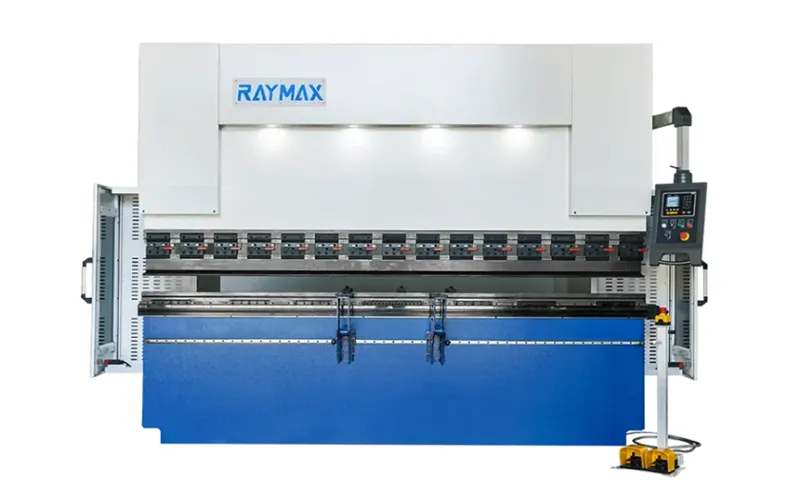
This article provides an in-depth look at the different axes involved in press brake operation and how they contribute to high-quality bending, making it an essential read for professionals in the manufacturing industry.
What is a Press Brake Axis System?
A press brake is a complex piece of machinery with several axes working together to ensure accurate metal bending.
The axis system in a press brake controls the movement of various components, including the punch, ram, and sheet material. Each axis plays a specific role in the bending process, allowing for flexibility and precision.
Understanding these axes is key to maximizing the performance of the press brake and ensuring high-quality outcomes.

Types of Press Brake Axes
Press brakes typically operate on multiple axes, each responsible for a different movement in the machine. The common axes in a press brake machine include:
Y-Axis (Vertical Axis)
The Y-axis controls the vertical movement of the ram or punch. This axis determines the depth of the bend and is responsible for applying force to the material. As the ram moves up and down along the Y-axis, it presses the metal sheet against the lower die, creating the bend. Precision in the Y-axis is crucial for achieving the correct bend angle and depth.
In high-precision tasks, such as bending metal sheets for the automotive or aerospace industries, the Y-axis needs to be controlled very precisely to ensure the desired results.
X-Axis (Horizontal Axis)
The X-axis controls the horizontal movement of the back gauge. The back gauge is a critical component of the press brake, used to position and support the metal sheet during the bending process.
The X-axis ensures that the sheet is placed correctly along its length, which is essential for consistent and accurate bends across the material.
An accurate X-axis allows for the proper alignment of the metal sheet, which reduces the chance of errors in the bending process and ensures a high-quality finished product.
R-Axis (Ram Stroke or Stroke Axis)
The R-axis governs the ram stroke or depth of the punch’s movement. It is essential for determining how much force is applied to the material during the bending process. The amount of stroke required depends on the material thickness and type.
The R-axis is crucial when working with harder metals or thicker sheets, as it controls the depth and force of the bend, ensuring that the material is deformed to the required shape without over-stretching or cracking.
For instance, a thicker sheet of steel will require more stroke and force, which is precisely managed by the R-axis.
Z-Axis (Vertical Tooling Adjustment Axis)
The Z-axis is used to control the vertical movement of the tooling, which can be adjusted to accommodate different material thicknesses and bend radii.
Some press brakes also use the Z-axis for fine-tuning the punch or lower die’s alignment, ensuring precise positioning for each bend. The Z-axis is especially important when the press brake is set up to handle various sizes and types of metal sheets, as it allows for quick adjustments without compromising on accuracy.
The Importance of Press Brake Axis Precision
The precision of the press brake’s axis system is crucial for achieving high-quality bends. In industries such as automotive, aerospace, and heavy machinery, where precision is a top priority, any deviation in the axis can result in poor-quality bends, leading to material waste, rework, or even part failure.

Accurate control of each axis ensures that the metal sheet is bent precisely to the required specifications, minimizing the risk of errors and improving the overall quality of the finished product.
The advanced digital controls available on modern CNC (Computer Numerical Control) press brakes provide even more precision. CNC press brakes use programmed algorithms to control the movement of each axis, ensuring the bends are performed consistently with minimal human error.
With the integration of automation, these machines can handle more complex bends and larger production volumes while maintaining tight tolerances.
Conclusione
The axis system of a press brake is a critical component in the metal forming process. By understanding the roles of the Y, X, R, and Z axes, manufacturers can optimize their press brake operations for better precision, higher efficiency, and better-quality finished products.
As technology continues to evolve, press brakes will become even more advanced, incorporating automation and multi-axis control to handle increasingly complex bending tasks.
If you are looking for 2-Axis or more Axis press brake, contact Raymaxbending for more press brake details!