 Italiano
  English
  العربية
  Nederlands
  Français
  Deutsch
  Português
  Русский
  Español
When it comes to metal forming, selecting the right equipment is crucial for achieving precise results. Among the most commonly used machines in metalworking are presse piegatrici E plate rolling machines. Both have their unique strengths and applications, making it essential to understand their differences to make informed decisions. This article explores the distinctions between press brakes and plate rolling machines, focusing on their functions, applications, and performance.
What Are Press Brakes and Plate Rolling Machines?
Presse piegatrici are machines that use pressure and specialized dies to bend metal sheets into specific shapes. Known for their versatility, they can create straight bends, angled folds, or intricate profiles.
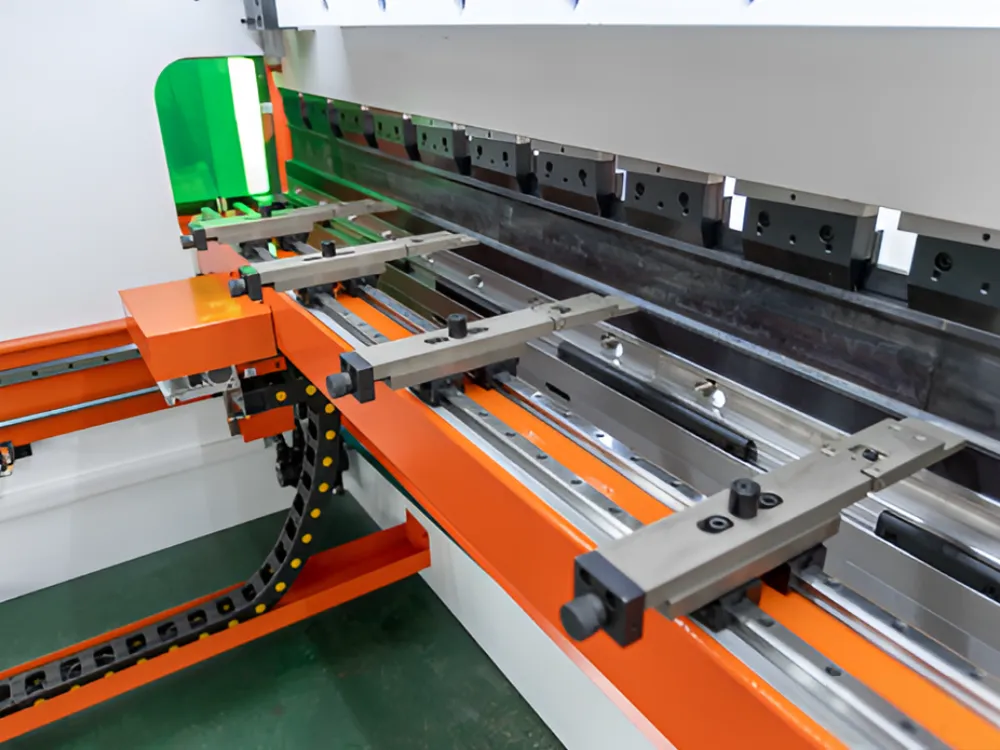
On the other hand, plate rolling machines utilize rollers to curve metal sheets into cylindrical, conical, or semi-circular shapes. These machines are designed for tasks requiring consistent and smooth curvatures, such as producing pipes, tanks, or curved panels.
Working Principles
The core difference lies in how these machines manipulate metal:
Press Brakes

ress brakes use vertical force applied by a hydraulic or mechanical ram to press a sheet metal piece against a die, forming precise bends. Modern CNC press brakes enhance accuracy by automating the process and offering programmable bending sequences.
Plate Rolling Machines
These machines operate with a set of rollers—typically three or four—that gradually deform the sheet metal by applying incremental pressure as the metal passes through the rollers.
Applicazioni
Each machine excels in different industries due to its distinct capabilities:
Press Brakes:
- Automotive: Manufacturing body panels and chassis components.
- Construction: Creating metal frames, window casings, and roofing materials.
- Electrical Appliances: Producing casings and housings for devices.
Plate Rolling Machines:
- Oil and Gas: Producing pressure vessels and storage tanks.
- Shipbuilding: Forming hull sections and other curved parts.
- Renewable Energy: Rolling towers for wind turbines.
Performance Comparison
|
Caratteristica |
Press Brakes |
Plate Rolling Machines |
|
Shape Formation |
Straight lines, multi-angle bends |
Cylindrical, conical, and curved forms |
|
Precision |
High accuracy, especially with CNC models |
Precision varies, but excels in curves |
|
Spessore del materiale |
Suitable for thin to moderately thick sheets |
Ideal for thick metal plates |
|
Setup Time |
Quick setup for small runs |
Longer setup time for larger projects |
Advantages of Press Brakes
High Precision

With CNC controls, press brakes can achieve precise angles and complex bending sequences.
Versatility
They accommodate a wide range of materials and thicknesses, making them ideal for diverse industries.
Ease of Use
Modern machines with automated features reduce operator workload.
Pros of Plate Rolling Machines
Specialized for Curves
Perfect for applications that require circular or rounded shapes.
Robust for Thick Plates
Handles heavy-duty applications, particularly in industries like shipbuilding and energy.
Efficient for High Volumes
Once set up, these machines efficiently produce large quantities of curved parts.
Choosing the Right Machine
When selecting between a press brake and a plate rolling machine, consider the following factors:
Material Shape and Thickness
If your projects involve complex bends or thinner materials, a press brake is ideal. For cylindrical or conical shapes and thicker materials, go for a plate rolling machine.
Volume di produzione
Press brakes are well-suited for small to medium production runs, while plate rolling machines excel in high-volume applications.
Space and Budget
Plate rolling machines tend to be larger and costlier. If space or budget is a constraint, a press brake might be the better choice.
Integration in Manufacturing
In some cases, these machines are used in tandem. For example, a press brake can pre-bend the edges of a metal sheet before the plate rolling machine completes the cylindrical shaping. This combination optimizes precision and efficiency, especially for complex projects.
Conclusione
Understanding the differences between presse piegatrici E plate rolling machines is key to selecting the right tool for your needs. While press brakes offer precision and versatility for straight and angular bends, plate rolling machines excel at producing smooth, curved shapes for heavy-duty applications. Both machines have their place in the metal fabrication industry, and choosing the right one depends on your specific requirements.
If you are now looking for a cost-effectiveness press brake, Contact Raymaxbending Now! We provide best press brake for our customers and help them win their life!