 Deutsch
  English
  العربية
  Nederlands
  Français
  Italiano
  Português
  Русский
  Español
When working with sheet metal fabrication, one of the most important calculations is determining the correct Abkantpressen-Tonnage required for a specific bending task. Choosing the right tonnage ensures safe operation, precise bends, and extended tooling life. This guide explains how to calculate press brake tonnage for different applications and introduces some of the most commonly used press brake models.
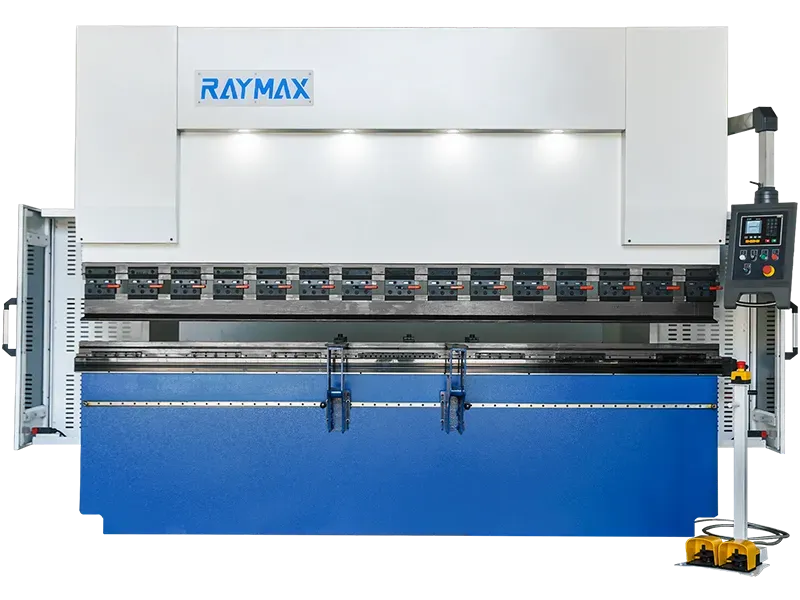
Was ist die Abkantpressentonnage?
Press brake tonnage refers to the amount of force a press brake machine applies to bend metal. It is typically measured in tons (imperial system) or kilonewtons (metric system). While a machine might be rated at 100 tons, this doesn’t mean that every bending operation requires the full capacity. Instead, the actual force needed depends on various bending parameters, such as material thickness and type, bending length, and die size.
Misjudging the tonnage can lead to insufficient bending (resulting in springback or inaccurate angles), excessive wear on the machine, or even permanent damage to tooling.

Key Factors That Affect Tonnage Calculation
Several variables impact the amount of tonnage needed for a given bend:
- Materialtyp: Mild steel, stainless steel, and aluminum each have different hardness and yield strength, directly affecting the required tonnage. Stainless steel, for instance, typically requires more force than mild steel.
- Material Thickness: Thicker sheets demand higher force to achieve the same bend angle.
- Bending Length: The longer the bending line, the more force is needed. Tonnage is usually calculated per meter or per inch.
- Die Opening (V-width): A wider V-die opening reduces the required force, while a narrow die increases it. Standard V-width is usually 8× the material thickness.
Bending Method:
- Air Bending: The most common, using partial contact between punch and die. Requires the least force.
- Bottom Bending: The punch fully contacts the bottom of the die, needing more force.
- Prägung: The punch presses into the material and die with full force—this requires the most tonnage.
Press Brake Tonnage Calculation Formula
Here is a commonly used formula to estimate press brake tonnage:
Tonnage (per meter) = (K × T² × L) / V
Where:
- K = Material factor (for mild steel: ~1.33)
- T = Material thickness (in mm)
- L = Bending length (in mm)
- V = V-die opening (in mm)
Example:
To bend a 3mm mild steel sheet over a 1000mm length using a 24mm V-die:
Tonnage = (1.33 × 3² × 1000) / 24 = 499.5 / 24 ≈ 20.8 tons
Always include a safety margin (about 20%) in real-world applications.
Using Tonnage Charts
If math isn’t your thing, tonnage charts offer a quick solution. These charts show required force per meter based on material thickness and V-die opening. Here’s how to use them:
- Find your material thickness on the vertical axis.
- Match it with your V-opening on the horizontal axis.
- Read the tonnage per meter in the intersecting cell.
- Multiply that value by your actual bending length.
Charts are especially handy for common metals like mild steel, stainless steel, and aluminum.

Impact of Bending Method on Tonnage
Each bending method affects how much tonnage is required:
Bending Method | Relative Force Required | Use Case |
Air Bending | Lowest (~25–50%) | General applications, energy-saving |
Bottom Bending | Moderate (~100%) | Higher accuracy, less springback |
Prägung | Highest (200%+) | Sharp angles, thin sheets |
Air bending is the most energy-efficient and widely used method, while coining is reserved for precise jobs requiring exact bend angles.
Commonly Used Press Brake Tonnage Models
Selecting the right press brake tonnage depends on your production needs. Below are common tonnage ranges and their typical use:
- 40T–80T: Ideal for thin sheet metal (≤2mm), like HVAC ducting or lightweight panels.
- 100T–160T: Most popular for general-purpose shops; bends mild steel up to 4–6mm thick.
- 200T–300T: Used for bending thick plates, structural components, and medium-heavy fabrication.
- 400T+: Suitable for large-scale or industrial applications such as shipbuilding, containers, and heavy equipment.
Also, the bending length (working width) matters. A 160T press brake with 3200mm length is common in many workshops, providing flexibility for a wide range of jobs.
Popular capacity models include the widely used 100 ton press brake and 100 ton hydraulic press machine, which are ideal for small to medium workshops. For heavier-duty applications, many manufacturers offer machines such as the 150 ton press brake, 200 ton press brake.
These are versatile for bending thicker carbon steel or stainless steel materials with consistent accuracy. In high-capacity environments such as container manufacturing or structural steel processing, options like the 250 ton press brake and 400 ton press brake are preferred for their robust performance and deeper forming capabilities.
Introducing RAYMAX: Reliable Press Brake Solutions
If you’re looking for quality press brake machines across a range of tonnages, RAYMAX offers an excellent selection.
RAYMAX specializes in hydraulic and CNC press brakes ranging from 40T to over 600T. Their machines are engineered for precision, energy efficiency, and long service life. Highlights include:
- Intelligent CNC control for automatic tonnage adjustment
- Robust steel frame for long-term structural accuracy
- Customizable V-die tooling and back gauge options
- Ideal for automotive, appliance, metal furniture, and industrial part production
Whether you’re a small workshop or a large-scale fabricator, RAYMAX provides tailored solutions that meet modern production needs while ensuring operator safety and high bending efficiency.
Abschluss
Calculating press brake tonnage is a vital step in metal fabrication. Using the correct tonnage prevents tool wear, ensures bending accuracy, and protects both the machine and operator. By understanding key factors like material type, thickness, die size, and bending method, you can confidently determine the right tonnage for your application.
And if you’re ready to invest in a quality press brake, consider RAYMAX—a trusted brand offering reliable machines across all tonnage ranges.